
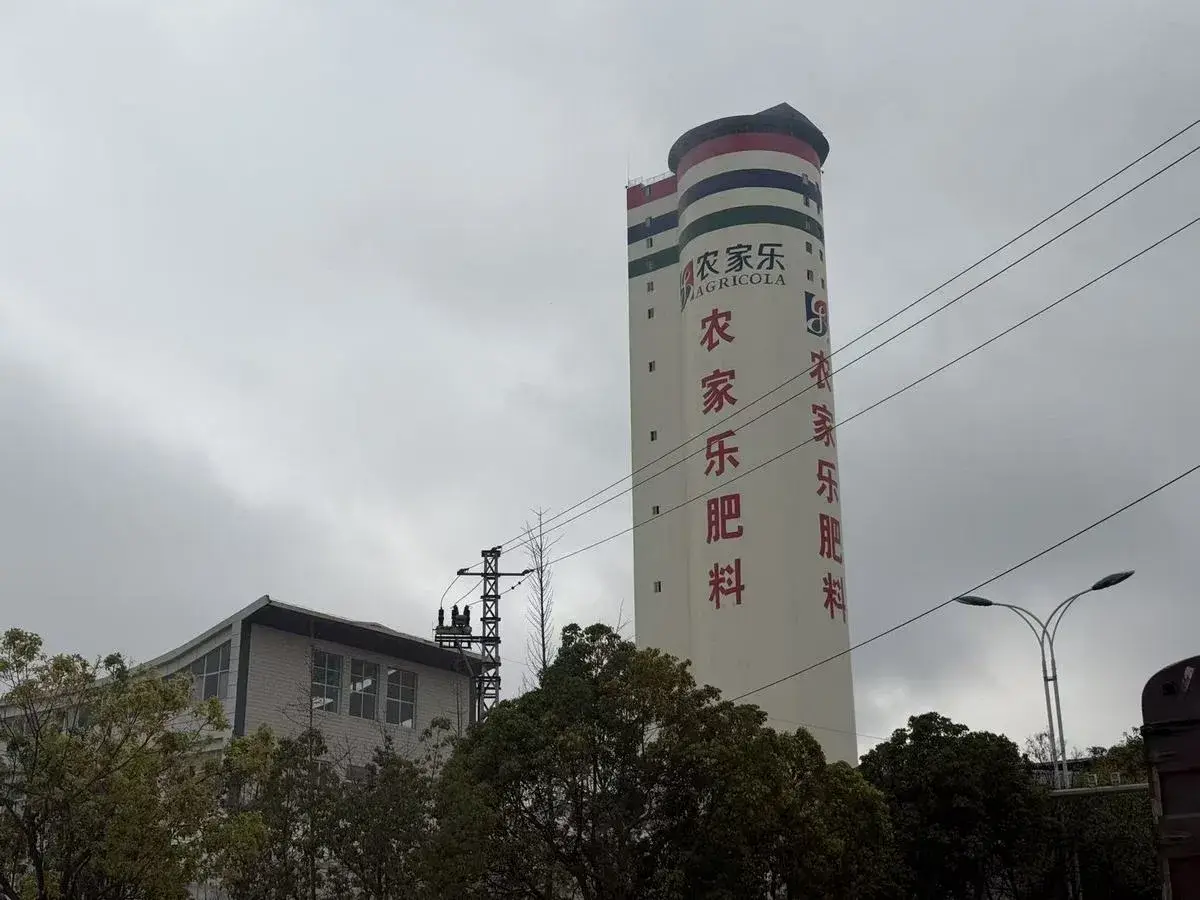
Tower Mixed Fertilizer Production Line
Working Principle
- Raw materials such as urea, ammonium phosphate and potassium sulfate are fed into the top of the tower, where they are mixed in a blending unit to make sure the materials are evenly distributed before granulation.
- The blended material is then sent to a forming section at the upper part of the tower, where it is formed into small droplets before granulation begins.
- After forming at the top of the tower, the material is shaped into small droplets, which then move downward inside the tower and gradually solidify into granules as they cool during the descent.
- After granulation, the fertilizer goes to a cooling stage where the particles cool down and harden to become stable.
- The finished product then goes through a screening stage to remove irregular granules, so only particles within the required size range are kept for packaging.
Features
- The tower mixed fertilizer plant eliminates the need for a traditional drying system, which is normally one of the highest energy-consuming stages in fertilizer production. By removing the drying section, the fertilizer production process becomes more energy-efficient.
- The tower granulation process makes full use of the heat generated during urea melting, which helps reduce the moisture content of the material, so no additional drying step is required.
- Liquid urea can be used directly in the process, which adds flexibility and makes operation more convenient for fertilizer producers.
- The granulation process has a high formation rate, with very little recycled material during production.
- The finished fertilizer granules are round and smooth, with moisture content below 1%, compressive strength above 30N, and a low tendency to clump during storage.